

Images are included for general illustration and do not establish or predict an individual treatment outcome.
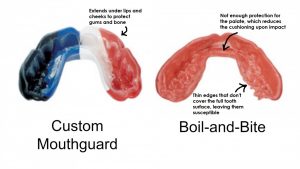
A mouthguard is part of injury prevention
A sports mouthguard cushions and distributes force from an impact to the mouth. It can reduce the risk or severity of some dental injuries, but it cannot prevent every injury. Wear it during training as well as competition when there is a risk of contact or a fall.
Risks are not limited to sports described as contact sports. A collision with another player, equipment or the ground can affect the teeth and mouth in other activities too. Ask your dentist and sporting organisation about protection suited to the activity. A mouthguard should not be relied on to prevent concussion or replace other protective equipment.
Compare the fit and design
A custom-fitted mouthguard is made from an impression or scan of your teeth. Store-bought options include stock designs and mouthguards shaped using the manufacturer’s heating instructions. Fit and thickness affect how a mouthguard functions; poorly fitting designs can move or interfere with speech and breathing.
Ask a dental practitioner to assess an uncomfortable or loose mouthguard. Do not assume a guard remains suitable after dental treatment, orthodontic changes or a child’s growth. People wearing braces should seek advice about a suitable design rather than adapting a guard without guidance.
Care between uses
Follow the cleaning instructions for the product. Rinse after use, allow it to dry and keep it in a protective case. Avoid leaving it in direct heat or sunlight, and do not chew it. Heat can distort its shape.
Check for splits, wear or a change in fit, and bring the mouthguard to dental reviews. A damaged guard may need replacement. Ask about current options and an estimate before ordering; health-fund contributions depend on your individual cover.
If an injury happens
Seek prompt dental advice after an injury even if a mouthguard was worn. A displaced or knocked-out tooth needs urgent assessment. If there is a serious head injury, difficulty breathing or severe uncontrolled bleeding, call 000 or go to hospital. A mouthguard is protective equipment, not a treatment for an injury.
Related articles
- Dental Emergencies: When and Where to Seek Help
- Caring for Your Child’s Teeth at Home
- Preventive Dental Care: A Plan for Your Oral Health
This article provides general information only. An examination is needed to assess your circumstances and suitability for treatment. All dental treatment carries risks, and results vary between individuals.