Jaw Pain: When Is It a Dental Emergency?
Jaw pain is a dental emergency when it comes with facial swelling, fever, trouble opening your mouth, or after an injury. It is often caused by a tooth infection, wisdom teeth, grinding or a problem with the jaw joint. But pain in the jaw with chest pain, shortness of breath or sweating can be a heart attack, so call 000 straight away. If you’re not sure how urgent a mouth or tooth problem is, see what counts as a dental emergency. Below are the warning signs, the common causes and what you can do. Call 000 first for these warning signs Pain in the jaw, neck, shoulder or arm together with chest pain or discomfort, shortness of breath, sweating, nausea or dizziness can be a sign of a heart attack. Call 000 immediately. Don’t drive yourself to hospital and don’t wait to see if it passes. Heart attack symptoms can be vague, particularly in women, older people and people with diabetes. Also call 000 or go to your nearest hospital emergency department if you have: Signs of a broken jaw include teeth that suddenly don’t meet properly, numbness of the lower lip or chin, bruising under the tongue, and pain or difficulty moving the jaw. Support the jaw gently with your hand or a scarf while you travel, and don’t try to push it back into place yourself. If you’re over 50 and have new pain in the jaw when chewing along with headache, scalp tenderness or changes to your vision, see a doctor the same day. For advice at any hour, call healthdirect on 1800 022 222. Common dental causes of jaw pain Once serious medical causes are ruled out, most pain in this area has a dental or jaw-joint cause. Tooth infection An abscessed tooth can cause a deep, throbbing ache that spreads into the jaw, ear or neck. You might notice swelling, a bad taste, tenderness when biting or a fever. Dental infections don’t clear up on their own and can spread, so see a dentist urgently. Antibiotics alone don’t remove the source, and they should only be taken when prescribed. Wisdom teeth A partly erupted wisdom tooth can trap food and bacteria under the gum flap, causing pericoronitis. The gum at the back of the mouth becomes swollen and sore, and it can be painful to open wide or swallow. Warm salty rinses can help in the short term, but repeated flare-ups are a common reason for wisdom tooth removal. Grinding and clenching Many people grind or clench during sleep or under stress without realising. Clues include a tired, aching jaw in the morning, headaches at the temples, worn or chipped teeth and tender cheek muscles. It is rarely an emergency, but it is worth having checked. Jaw joint (TMJ) problems The temporomandibular joint sits just in front of each ear. Problems here can cause aching around the ear, clicking or popping, pain when chewing and difficulty opening fully. Symptoms often come and go and usually improve with simple care. A locked jaw If your jaw suddenly catches and you can only open part of the way, it may be a disc problem in the joint. This is usually not dangerous but should be seen soon. If your jaw is stuck open and won’t close, it may be dislocated and needs hospital care. Difficulty opening with swelling and fever can mean a spreading infection and is also urgent. Other causes Sinus infections can make the upper back teeth and cheeks ache. Earaches and nerve conditions can also feel like jaw or tooth pain, which is why your dentist will examine carefully and may refer you to your doctor. What you can do at home If the pain is getting worse, keeping you awake, or comes with swelling or fever, don’t wait it out. How a dentist can help Our emergency dentist in North Sydney aims to see urgent problems as soon as possible, often on the same day. Your dentist will ask about your symptoms and medical history, examine your teeth, gums, jaw muscles and joints, and take X-rays if needed. Depending on the cause, care may include: Your dentist will explain your options, the likely costs and any risks before treatment begins. People in North Sydney with ongoing jaw discomfort are welcome to call for advice. Frequently asked questions Need help now? North Sydney Dentistry is at Level 1, Suite 102/71 Walker St, North Sydney, a two-minute walk from North Sydney station. We’re open Monday to Friday, 9am to 6pm, and keep time aside for urgent problems where we can. Call (02) 8090 1108 or book online. This article is general information only and is not a substitute for advice from your own dentist or doctor. Any surgical or invasive procedure carries risks. Before proceeding, you should seek a second opinion from an appropriately qualified health practitioner. Related at Sydney CBD Dentistry: our Sydney CBD dentist at 70 Pitt St
Bleeding Gums: When to Worry and What to Do

Bleeding gums are most often caused by gingivitis, an early and reversible form of gum disease triggered by plaque along the gumline. Keep brushing and cleaning between your teeth gently, and book a check-up if the bleeding doesn’t settle within a week or two. Heavy bleeding that won’t stop, or bleeding with unexplained bruising, needs prompt medical attention. A little pink in the sink when you brush is common, but it isn’t normal. Healthy gums don’t usually bleed with gentle brushing or flossing. This guide explains the likely causes, what you can do at home and when bleeding becomes urgent. For other urgent problems, see what counts as a dental emergency. When bleeding gums are urgent Call 000 or go to your nearest hospital emergency department if you have: See your doctor promptly, the same day if you can, if your gums bleed and you also notice unexplained bruising, frequent nosebleeds, tiny red or purple spots on the skin, unusual tiredness, fever or weight loss. These can point to a problem with the blood or another medical condition that needs checking. If you take blood thinners and your gums are bleeding more than usual, contact your doctor for advice. Don’t stop or change any prescribed medicine without medical advice, as that can be dangerous. Out of hours, call healthdirect on 1800 022 222 for 24/7 nurse advice. Bleeding after a tooth extraction Some oozing for the first day is expected. If bleeding is steady, fold a clean gauze pad, place it over the socket and bite firmly for 15–20 minutes without checking. Sit upright and avoid rinsing, spitting and hot drinks. If it keeps bleeding after this, contact our emergency dentist in North Sydney or, out of hours, go to the nearest emergency department. Why do gums bleed? Gingivitis When plaque sits along the gumline, the gums become red, puffy and tender, and they bleed easily when brushed. Gingivitis doesn’t damage the bone, so it can usually be reversed with thorough daily cleaning and a professional clean. Periodontitis If gingivitis continues, the inflammation can spread below the gumline and start to destroy the bone and fibres that hold teeth in place. Signs include bleeding, receding gums, bad breath, a bad taste, gum pockets and loose or shifting teeth. Lost bone doesn’t usually grow back, but treatment can often slow or stop the disease. Other common factors What to do at home Over-the-counter pain relief such as paracetamol or ibuprofen, taken as directed on the pack, may help with sore gums if it’s safe for you. Ibuprofen isn’t suitable for everyone, particularly people on blood thinners, so check with your pharmacist. How a dentist treats gum bleeding Your dentist will look at your gums, measure any pockets around the teeth and may take X-rays to check the bone. They will also ask about your general health and medications. Treatment usually includes: In many cases, gums bleed noticeably less within a few weeks of a professional clean and consistent home care. Keeping your gums healthy Regular check-ups let problems be found while they are still reversible. Our preventive dentistry care in North Sydney includes examinations, cleans and advice tailored to your gums. If you have diabetes, are pregnant or take medicines that affect your gums, you may need more frequent visits. Frequently asked questions Need help now? North Sydney Dentistry is at Level 1, Suite 102/71 Walker St, North Sydney, a two-minute walk from North Sydney station. We’re open Monday to Friday, 9am to 6pm, and keep time aside for urgent problems where we can. Call (02) 8090 1108 or book online. This article is general information only and is not a substitute for advice from your own dentist or doctor. Any surgical or invasive procedure carries risks. Before proceeding, you should seek a second opinion from an appropriately qualified health practitioner. Related at Sydney CBD Dentistry: our Sydney CBD dentist at 70 Pitt St
Loose Adult Tooth: Causes and What to Do
A loose adult tooth is a sign that something is affecting the gum, bone or ligament that holds it in place, most often an injury, gum disease, grinding or an infection. If the tooth became loose after a knock, see a dentist the same day. If it has loosened slowly over weeks or months, book an appointment soon, and avoid wiggling it in the meantime. Adult teeth are designed to move only very slightly under pressure, so any movement you can feel is worth having checked. Many can be firmed up again when the cause is found early. This article explains the common causes, what you can do at home and how a dentist can help. If you’re unsure how urgent your situation is, see our dental emergency guide. When a loose tooth needs hospital care Call 000 or go to your nearest hospital emergency department if the tooth was loosened by a hard blow and you also have: Out of hours, you can also call healthdirect on 1800 022 222 for 24/7 nurse advice about where to go. What causes a loose adult tooth? Injury A fall, a sports knock or a bite on something hard can stretch or tear the ligament around the root, push the tooth out of position or crack the root below the gum. The tooth may sit higher or lower than its neighbours, look crooked or feel tender to bite on. Gum disease Periodontitis is the most common cause of teeth loosening slowly in adults. Plaque and tartar at the gumline cause long-term inflammation that gradually destroys the bone supporting the teeth. Other signs include bleeding gums, bad breath, receding gums and gaps appearing between teeth. It often causes no pain until it is advanced. Grinding and clenching Heavy grinding or clenching, often during sleep, puts repeated force on the teeth. Over time this can widen the ligament space and make a tooth feel mobile, especially if the gums and bone are already weakened. You might also notice worn teeth or a sore jaw in the morning. Infection An abscess at the tip of a root or in the gum can damage the surrounding bone and make a tooth feel loose and raised. You may have throbbing pain, swelling, a bad taste or a pimple on the gum. When the infection is treated, the tooth often firms up again. Other causes Some looseness is expected during orthodontic treatment. Less commonly, cysts or other conditions affecting the jaw bone can loosen teeth, which is one reason your dentist may take an X-ray. What to do right now If the tooth is very loose and you’re worried it could come out while you sleep, see a dentist urgently. If it does come out, keep it in milk and bring it with you. How your dentist treats a loose adult tooth Your dentist will ask what happened, check how much the tooth moves, test your bite and look at the gums. X-rays show the root and the bone around it. Our emergency dentist in North Sydney aims to see urgent problems as soon as possible, often on the same day. Depending on the cause, treatment may include: If the tooth can’t be kept Sometimes a tooth has lost too much support, or the root is fractured in a way that can’t be repaired. In that case, your dentist will discuss removing it and the options for filling the gap, such as a bridge or dental implants. Your dentist will explain the benefits, risks and likely costs of each option before anything is done. Preventing loose teeth Patients in North Sydney who notice any change in how their teeth feel are welcome to call us for advice. Frequently asked questions Need help now? North Sydney Dentistry is at Level 1, Suite 102/71 Walker St, North Sydney, a two-minute walk from North Sydney station. We’re open Monday to Friday, 9am to 6pm, and keep time aside for urgent problems where we can. Call (02) 8090 1108 or book online. This article is general information only and is not a substitute for advice from your own dentist or doctor. Any surgical or invasive procedure carries risks. Before proceeding, you should seek a second opinion from an appropriately qualified health practitioner. Related at Sydney CBD Dentistry: our Sydney CBD dentist at 70 Pitt St
Tooth Pain After a Filling: Normal or Not?
Mild tooth pain after filling a cavity is common, especially sensitivity to cold, and it usually settles over a few days to a couple of weeks. Pain that gets worse, lingers after hot or cold, starts on its own, wakes you at night or makes it hard to bite needs to be checked by your dentist. This guide explains what’s normal, what isn’t and when to call. If you have severe pain or swelling, see what counts as a dental emergency. Normal sensitivity after a filling Removing decay and placing a filling can irritate the pulp, the soft tissue inside the tooth that contains the nerve. The deeper the cavity, the closer the filling sits to the pulp and the more likely the tooth is to be sensitive for a while. Your gum can also feel sore where the injection was given or where equipment rested during treatment. Signs that usually fall within the normal range include: Easing normal sensitivity When tooth pain after filling isn’t normal Your bite feels high While your mouth is numb, it’s hard to tell whether a new filling is slightly too high. If it is, that tooth hits first every time you bite, which can bruise the ligament around the root and make the tooth increasingly sore. Signs include the tooth meeting before the others, pain on biting that isn’t improving, and an ache in the jaw. This is usually easy to fix. Your dentist checks your bite with thin marking paper and smooths the high spot. Leaving it can also put extra stress on the filling. Signs of an irritated or inflamed nerve Dentists call inflammation of the pulp pulpitis. When it’s mild, the pulp can often recover, and pain only comes with a trigger and settles quickly. When the pulp is too inflamed to recover, the signs are different: If the pulp can’t recover, root canal therapy or removing the tooth may be needed. This is more likely when the decay was very deep, and your dentist may have mentioned the possibility before treatment. Referred pain Pain from one tooth can be felt in nearby teeth, or even in the opposite jaw, because the nerves share pathways. An ache that seems to come from a neighbouring tooth may actually be from the one that was filled, or the other way around. Your dentist can test each tooth to find the source. Other possible causes When to go to hospital Pain after a filling is rarely a hospital matter, but call 000 or go to your nearest hospital emergency department if you have: Outside clinic hours, healthdirect on 1800 022 222 offers 24/7 nurse advice. When to call your dentist We aim to see urgent problems as soon as possible, often on the same day. You can contact our emergency dentist in North Sydney, or read more about our dental fillings. What your dentist may do At our North Sydney clinic, your dentist will explain what they find, your options and any costs before going ahead. Frequently asked questions Need help now? North Sydney Dentistry is at Level 1, Suite 102/71 Walker St, North Sydney, a two-minute walk from North Sydney station. We’re open Monday to Friday, 9am to 6pm, and keep time aside for urgent problems where we can. Call (02) 8090 1108 or book online. This article is general information only and is not a substitute for advice from your own dentist or doctor. Any surgical or invasive procedure carries risks. Before proceeding, you should seek a second opinion from an appropriately qualified health practitioner. Related at Sydney CBD Dentistry: Dental Fillings in Sydney CBD · our Sydney CBD dentist at 70 Pitt St
Dry Socket After Tooth Extraction: Signs, Relief and Prevention
Dry socket happens when the blood clot in a tooth extraction site breaks down or comes out too early, leaving the bone underneath exposed. It usually causes pain that gets worse, rather than better, two to four days after an extraction. If you think you have it, call your dentist. Treatment is simple, and many people feel noticeably better once the socket has been cleaned and dressed. Worsening pain after an extraction is one of the problems our dental emergency guide lists as needing prompt care. Here’s how to recognise the problem, what your dentist will do and how to lower your risk. What is dry socket? After a tooth is removed, a blood clot forms in the empty socket. The clot protects the bone and nerve endings and is the base on which new tissue grows. If the clot doesn’t form properly, dissolves early or is dislodged, the bone is left exposed to air, food and fluids. The medical name is alveolar osteitis. It isn’t usually a serious infection, but it can be very painful and slows healing. It’s more common after lower wisdom tooth removal than after other extractions. Signs of dry socket Normal healing or something more? Some pain, swelling and bruising is normal after an extraction, especially after wisdom tooth removal. It usually peaks within the first two to three days and then gradually improves. The key difference is that with a dry socket, the pain gets worse over time instead of better. A creamy white or yellowish layer in the socket after a few days is often normal healing tissue, not a sign of a problem on its own. Signs of infection Fever, pus, or swelling that increases several days after the extraction may point to an infection instead. Call your dentist promptly. When to go to hospital Call 000 or go to your nearest hospital emergency department if you have: If something happens outside clinic hours and you’re not sure what to do, call healthdirect on 1800 022 222 for 24/7 nurse advice. How dry socket is treated This condition should be managed by your dentist rather than at home. At your appointment, your dentist will usually: Antibiotics aren’t usually needed for the condition itself. With care, the pain often eases within a few days and the socket usually settles over about a week to 10 days. Why you shouldn’t treat it yourself It’s tempting to try home remedies, but putting things into the socket can irritate the bone or introduce bacteria. Don’t poke the socket with fingers or cotton buds, don’t pack it with clove oil, aspirin or other products, and don’t take leftover antibiotics. Until you’re seen, take over-the-counter pain relief such as paracetamol or ibuprofen, taken as directed on the pack, if it’s safe for you. Your dentist may also suggest gentle warm salty water rinses. How to prevent dry socket Some things raise your risk: To lower your chances: Our tooth extraction page explains what to expect before and after having a tooth removed. Getting help in North Sydney If your extraction site is getting more painful, call us. We aim to see urgent problems as soon as possible, often on the same day. If your extraction was done elsewhere, it’s usually a good idea to contact that dentist first, but our emergency dentist in North Sydney can see you if they aren’t available. Frequently asked questions Need help now? North Sydney Dentistry is at Level 1, Suite 102/71 Walker St, North Sydney, a two-minute walk from North Sydney station. We’re open Monday to Friday, 9am to 6pm, and keep time aside for urgent problems where we can. Call (02) 8090 1108 or book online. This article is general information only and is not a substitute for advice from your own dentist or doctor. Any surgical or invasive procedure carries risks. Before proceeding, you should seek a second opinion from an appropriately qualified health practitioner. Related at Sydney CBD Dentistry: our Sydney CBD dentist at 70 Pitt St
Emergency Root Canal: What to Expect
An emergency root canal is usually the first stage of root canal therapy, done to relieve severe toothache caused by an inflamed or infected nerve. On the day, your dentist numbs the tooth, removes the damaged pulp, cleans the canals and seals in a medicated dressing. The treatment is then completed over one or more further visits. If you’re not sure whether your pain needs urgent care, our dental emergency guide can help you decide. This article explains what to expect, step by step. Signs you may need urgent root canal treatment Inside each tooth is the pulp, a soft tissue containing nerves and blood vessels. Deep decay, a crack or an injury can let bacteria reach it. Signs the pulp may be badly inflamed or infected include: Not every toothache needs a root canal. Your dentist will test the tooth and take an X-ray to find the cause. When to go to hospital instead Call 000 or go to your nearest hospital emergency department if you have: Our clinic is open Monday to Friday. Outside those hours, call healthdirect on 1800 022 222 for 24/7 nurse advice. What happens during an emergency root canal This first stage focuses on relieving pain and removing the source of the problem. Many people who visit us in North Sydney find their throbbing pain eases considerably within a day or two, although the tooth is often tender to bite on for a few days. If you feel anxious about dental treatment, ask us about happy gas (nitrous oxide), which can help you feel more relaxed while you stay awake. Completing the treatment The dressing is a temporary step. Root canal therapy is usually completed over one or two further visits, often a week or more apart. At these appointments, your dentist will: Don’t leave a temporary filling in place longer than advised. It can wear or leak, letting bacteria back in and lowering the chance of success. You can read more about root canal therapy and how each stage works. Why a crown is often recommended A root-filled back tooth has usually lost a lot of structure to decay, old fillings and the access opening, which makes it more likely to crack under chewing forces. A crown covers and protects the tooth. Your dentist will advise whether your tooth needs one and when. Aftercare between visits Antibiotics aren’t usually needed for toothache alone. Your dentist will prescribe them only if appropriate, for example if an infection is spreading. How much does an emergency root canal cost? The cost depends on which tooth is involved (back teeth usually have more canals), how complex the canals are, how many visits are needed, X-rays and whether a crown is recommended afterwards. Your dentist will give you a quote before treatment. For more detail, see our article on root canal cost in Sydney. If you have extras cover, you may be able to claim part of the cost, depending on your policy. We’re a preferred provider for Bupa Members First, Medibank Members’ Choice and nib First Choice. See our price guide or ask about payment plans. To book, contact our emergency dentist in North Sydney. We aim to see urgent problems as soon as possible, often on the same day. Frequently asked questions Need help now? North Sydney Dentistry is at Level 1, Suite 102/71 Walker St, North Sydney, a two-minute walk from North Sydney station. We’re open Monday to Friday, 9am to 6pm, and keep time aside for urgent problems where we can. Call (02) 8090 1108 or book online. This article is general information only and is not a substitute for advice from your own dentist or doctor. Any surgical or invasive procedure carries risks. Before proceeding, you should seek a second opinion from an appropriately qualified health practitioner. Related at Sydney CBD Dentistry: our Sydney CBD dentist at 70 Pitt St
Children’s Dental Emergencies: A Guide for Parents
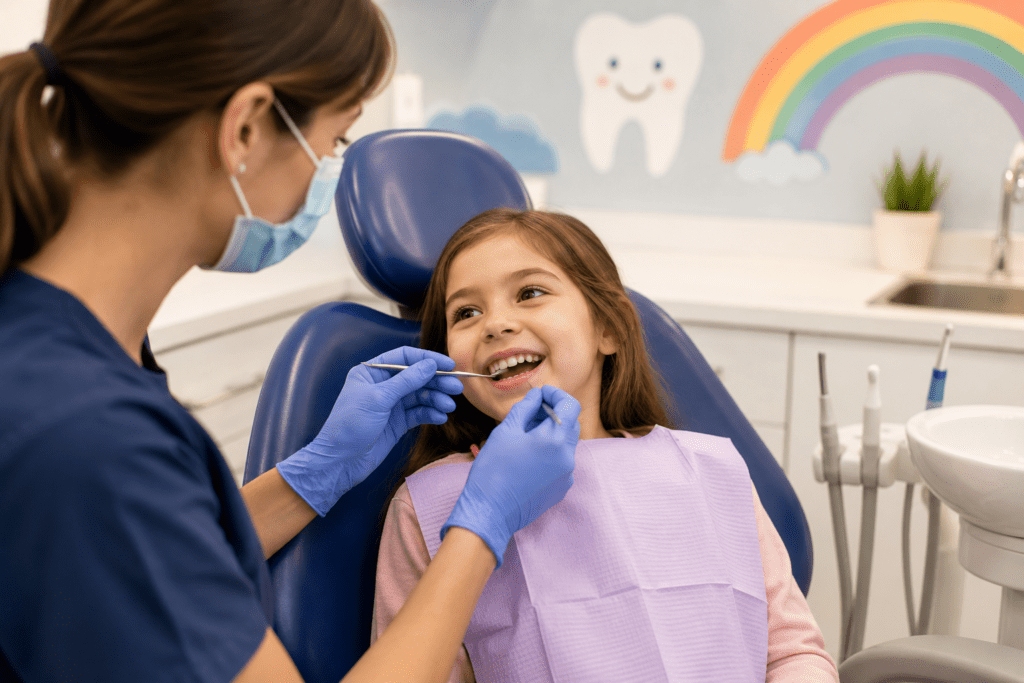
A children’s dental emergency usually means a knocked-out, broken or pushed-in tooth, a bad toothache, facial swelling or a cut to the lip or tongue. Stay calm, check for serious injuries first, then call a dentist as soon as possible. Call 000 straight away if your child is choking, struggling to breathe or has had a hard knock to the head. Kids are active, and falls at the playground, on scooters and at weekend sport around North Sydney are common causes of tooth injuries. This guide covers what parents most often face. For general advice, see what counts as a dental emergency. When to call 000 or go to hospital Call 000 or go to your nearest hospital emergency department if your child: If you think your child has swallowed a button battery or magnet, call 000 immediately, even if they seem well. If they’ve swallowed a baby tooth or another small object and are breathing, talking and swallowing normally, call healthdirect on 1800 022 222 or see your GP for advice. Knocked-out tooth: baby tooth or adult tooth? First work out which kind of tooth it is. Baby front teeth usually start to loosen around age 6, and adult front teeth usually come through between about 6 and 8. If you’re not sure, don’t put it back in. Keep it in milk and see a dentist straight away. Knocked-out baby tooth Never put a baby tooth back in. Doing so can damage the adult tooth developing underneath. Instead, press clean gauze on the gap to stop the bleeding, keep the tooth if you find it and bring your child in to be checked. If you can’t find the tooth, a dentist should check that it hasn’t been pushed up into the gum. Knocked-out adult tooth Chipped teeth, pushed-in teeth and mouth cuts Chipped or broken teeth Rinse your child’s mouth with warm water and hold a cold pack wrapped in a cloth against the outside of the lip or cheek to reduce swelling. Keep any broken pieces in milk or saline and bring them with you. Book in the same day if the tooth is painful, has a sharp edge or shows pink or red in the centre, which can mean the nerve is exposed. Pushed-in or loose teeth A tooth that has been pushed up into the gum, moved out of position or become loose should also be seen the same day, even if it’s a baby tooth. Don’t try to move it back yourself. After a knock, a baby tooth can turn grey weeks later. Let your dentist know if you notice this, or if a lump appears on the gum above it. Cuts to the lips, tongue and gums The mouth bleeds a lot, but most small cuts heal well. Rinse gently, then press a clean cloth or gauze firmly on the cut for 15–20 minutes. A wrapped cold pack on the outside of the lip can help with swelling. See a doctor or go to hospital if the cut is deep or gaping, goes right through the lip, crosses the edge of the lip or won’t stop bleeding, as it may need stitches. If a tooth was chipped at the same time, a dentist may check that no fragment is caught in the lip. Toothache in kids Toothache in children is often caused by decay, but it can also come from food trapped between teeth, a loose baby tooth or new adult molars coming through, usually around age 6 and again around age 12. Toothache with facial swelling or a fever needs to be seen the same day. If the swelling is spreading, go to hospital. Preventing a children’s dental emergency What happens at the appointment? We aim to see urgent problems as soon as possible, often on the same day. When you bring your child to our emergency dentist in North Sydney, we’ll ask what happened, check your child gently and take X-rays if needed. We’ll explain what we find and your options, including any costs, before starting treatment, and go at a pace that helps your child feel settled. Frequently asked questions Need help now? North Sydney Dentistry is at Level 1, Suite 102/71 Walker St, North Sydney, a two-minute walk from North Sydney station. We’re open Monday to Friday, 9am to 6pm, and keep time aside for urgent problems where we can. Call (02) 8090 1108 or book online. This article is general information only and is not a substitute for advice from your own dentist or doctor. Any surgical or invasive procedure carries risks. Before proceeding, you should seek a second opinion from an appropriately qualified health practitioner. Related at Sydney CBD Dentistry: our Sydney CBD dentist at 70 Pitt St
Weekend Dental Emergency: What to Do When Clinics Are Closed
A weekend dental emergency can feel harder to handle because most dental clinics, including ours, are closed on Saturday and Sunday. In short: call 000 or go to your nearest hospital emergency department for serious warning signs, call healthdirect on 1800 022 222 if you’re not sure how urgent it is, and use simple first aid for everything else until you can see a dentist. For a broader overview of urgent tooth problems, read our dental emergency guide. Step one: check for hospital warning signs A dentist isn’t the right first stop for every problem. Call 000 or go to your nearest hospital emergency department straight away if you, or someone you’re caring for, has: Hospitals can manage airway problems, spreading infections, heavy bleeding and injuries, but usually can’t repair a tooth, so you’ll still need a dentist afterwards. Step two: not sure how urgent it is? Call healthdirect If there are no warning signs but you’re worried, call healthdirect on 1800 022 222. It’s a free service staffed by registered nurses 24 hours a day, 7 days a week. The nurse will ask about your symptoms and help you decide whether to go to hospital now, see a GP or after-hours doctor, or manage at home until a dentist can see you. A GP can assess facial swelling or a fever and decide whether you need medication. Don’t take leftover antibiotics or someone else’s prescription. Antibiotics only help some dental infections, and they need to be prescribed for you. How to manage a weekend dental emergency at home Most weekend tooth problems can be kept comfortable until Monday with simple first aid. Many pharmacies open on weekends and can help with pain relief and supplies. Toothache Knocked-out adult tooth This is the one weekend problem that can’t wait until Monday, because the chance of saving the tooth is highest within about 30 minutes. Never put a baby tooth back in, as this can damage the adult tooth developing underneath. Broken tooth, lost filling or loose crown Rinse your mouth with warm water. Keep any broken pieces in milk or saline and bring them with you. Cover sharp edges with dental wax or sugar-free gum to protect your tongue and cheek. If a crown comes off, keep it in a small container and don’t glue it back with household glue. A temporary filling kit from the pharmacy may cover a hole for a day or two. Bleeding after an extraction Fold a clean gauze pad or cloth, place it over the socket and bite down firmly for 15–20 minutes without checking. Sit upright and avoid rinsing, spitting, hot drinks, smoking and vaping. If the bleeding won’t stop, go to hospital. Gum or facial swelling Use a wrapped cold pack on the outside of your cheek and don’t put heat on your face. Don’t try to pop a lump on the gum. If the swelling spreads, or you develop a fever, go to hospital. What to have ready for Monday Call us from 9am on Monday. We aim to see urgent problems as soon as possible, often on the same day. Read more about our same-day emergency dentist appointments. Having these ready helps your appointment run smoothly: When you see our emergency dentist in North Sydney, your dentist will examine the area, take X-rays if needed and focus on relieving pain first. Depending on the cause, you may need a filling, root canal therapy or an extraction, and your options and costs will be explained before any treatment. How to lower the chance of a weekend dental problem Frequently asked questions Need help now? North Sydney Dentistry is at Level 1, Suite 102/71 Walker St, North Sydney, a two-minute walk from North Sydney station. We’re open Monday to Friday, 9am to 6pm, and keep time aside for urgent problems where we can. Call (02) 8090 1108 or book online. This article is general information only and is not a substitute for advice from your own dentist or doctor. Any surgical or invasive procedure carries risks. Before proceeding, you should seek a second opinion from an appropriately qualified health practitioner. Related at Sydney CBD Dentistry: our Sydney CBD dentist at 70 Pitt St
Swollen Face From a Tooth Infection: When to Worry
Facial swelling from a tooth infection needs prompt attention. If the swelling is spreading, your eye is closing, you have a fever, or it’s hard to swallow or breathe, call 000 or go to your nearest hospital emergency department now. If you feel well and the swelling is small, see a dentist the same day. A dental abscess can’t be fixed at home, and antibiotics alone won’t solve it. This guide explains the warning signs, what to do while you wait and how the tooth is treated. For other urgent problems, see our dental emergency guide. Swollen face tooth infection: hospital warning signs Infection from a tooth can spread from the jaw into the soft tissues of the face and neck. Occasionally this becomes serious enough to affect breathing. Call 000 or go to the nearest emergency department if you notice: Also go to hospital for bleeding that won’t stop after 15–20 minutes of firm pressure, a possible broken jaw, or a knock to the head with loss of consciousness, vomiting or confusion. Out of hours, if you’re unsure, call healthdirect on 1800 022 222 for 24/7 nurse advice. Take extra care with children, and if you have diabetes, a weakened immune system or another serious health condition, as infections can progress faster. Seek help early rather than waiting overnight. Why does a tooth infection make your face swell? Bacteria can reach the inside of a tooth through deep decay, a crack or an old, leaking filling. As the nerve dies, infection collects at the tip of the root and forms an abscess, a pocket of pus. Infection can also start in a deep gum pocket or under the gum flap of a wisdom tooth. As pus builds up, it can push through the bone into the surrounding tissues. Infection from upper teeth often causes swelling in the cheek or near the eye, while lower teeth tend to cause swelling along or under the jaw. Other signs of a dental abscess Sometimes the pain eases when an abscess drains on its own, but the infection is still there and usually returns. When to see a dentist the same day If you have facial swelling but none of the hospital warning signs, call a dentist as soon as they open. We aim to see urgent problems as soon as possible, often on the same day. Our emergency dentist in North Sydney can assess the swelling, find the source and start treatment. If the swelling gets worse while you wait, don’t hold on for the appointment; go to hospital. What to do while you wait, and what to avoid Do Avoid Do antibiotics fix a tooth infection? Not on their own. Antibiotics are only available on prescription from a dentist or doctor, and they’re usually reserved for infections that are spreading or making you unwell. They can help bring the infection under control, but they can’t reach the source inside the dead or damaged tooth. Without treating the tooth, the infection usually comes back. Many dental abscesses are managed by draining the infection and treating the tooth, often without antibiotics at all. If you are prescribed them, take them exactly as directed and keep your follow-up appointment, even if the swelling goes down. How the infected tooth is treated At our North Sydney practice, your dentist will examine the area, take an X-ray and explain what they find. Treatment aims to drain the infection and remove its source: Your dentist will explain the options, likely costs and risks before anything is done. Severe infections sometimes need hospital care, including drainage under general anaesthetic. If you feel anxious about treatment, ask us about happy gas. Frequently asked questions Need help now? North Sydney Dentistry is at Level 1, Suite 102/71 Walker St, North Sydney, a two-minute walk from North Sydney station. We’re open Monday to Friday, 9am to 6pm, and keep time aside for urgent problems where we can. Call (02) 8090 1108 or book online. This article is general information only and is not a substitute for advice from your own dentist or doctor. Any surgical or invasive procedure carries risks. Before proceeding, you should seek a second opinion from an appropriately qualified health practitioner. Related at Sydney CBD Dentistry: our Sydney CBD dentist at 70 Pitt St
Is a Toothache an Emergency? How to Tell
Is toothache an emergency? It depends on your other symptoms. Toothache with spreading swelling, fever, or trouble swallowing or breathing needs a hospital now. Severe, throbbing or night-time pain needs a dentist today, while mild, short-lived sensitivity can usually wait for an appointment this week. Use the traffic-light guide below to decide what to do next. For knocked-out teeth, bleeding and other injuries, see our dental emergency guide. Is toothache an emergency? Use the traffic-light guide Red: go to hospital now Call 000 or go to your nearest hospital emergency department if you have toothache with any of these: These can be signs of a spreading infection or a serious injury that needs hospital care first. Once you’re safe, a dentist can treat the tooth. Amber: see a dentist today These signs suggest the nerve is badly inflamed or there is an infection. Call a dentist as early in the day as you can if you have: We aim to see urgent problems as soon as possible, often on the same day. Find out how our same-day emergency dentist appointments work, or call our emergency dentist in North Sydney. Green: book an appointment this week Green doesn’t mean ignore it. Early sensitivity is often a sign of decay or a worn filling, and finding it early usually means simpler treatment. If green symptoms get worse, treat them as amber. What your toothache might be telling you Short, sharp pain to cold This is often exposed dentine from gum recession, worn enamel or early decay. The nerve is usually still healthy, and a filling, a toothpaste for sensitive teeth or another simple treatment may help. Lingering or throbbing pain Pain that lingers after hot or cold, throbs, or keeps you awake often means the nerve (pulp) is inflamed beyond the point where it can recover. The usual options are root canal therapy to save the tooth or, in some cases, removing it. Pain on biting, with or without swelling This may point to a dental abscess, an infection at the root tip or in the gum, or a cracked tooth. An abscess needs prompt treatment to drain the infection and deal with its source. Pain that suddenly stops If a bad toothache suddenly disappears, the nerve may have died. The infection can still be there and may flare up later, so the tooth still needs checking. What to do while you wait Don’t put aspirin on the gum, don’t use heat packs on your face, and don’t take antibiotics unless a dentist or doctor has prescribed them. Antibiotics don’t treat the inside of the tooth, which is where most toothache starts. Toothache after hours North Sydney Dentistry is open Monday to Friday, 9am to 6pm. Outside those hours: What happens at an urgent toothache appointment? Your dentist will ask about your pain, check your medical history, examine the tooth and usually take an X-ray. The first goal is to find the cause and relieve pain, for example by removing decay and placing a temporary filling, starting root canal treatment or draining an infection. Your dentist will explain longer-term options, likely costs and any risks before going further. See our price guide for more on fees. Frequently asked questions Need help now? North Sydney Dentistry is at Level 1, Suite 102/71 Walker St, North Sydney, a two-minute walk from North Sydney station. We’re open Monday to Friday, 9am to 6pm, and keep time aside for urgent problems where we can. Call (02) 8090 1108 or book online. This article is general information only and is not a substitute for advice from your own dentist or doctor. Any surgical or invasive procedure carries risks. Before proceeding, you should seek a second opinion from an appropriately qualified health practitioner. Related at Sydney CBD Dentistry: our Sydney CBD dentist at 70 Pitt St