

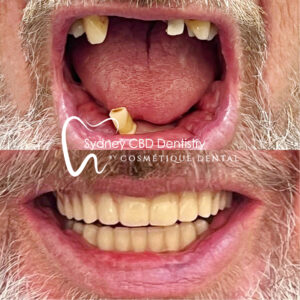
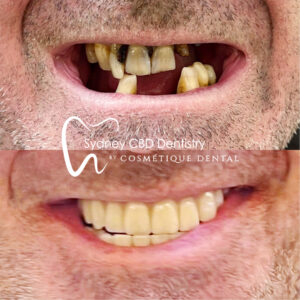
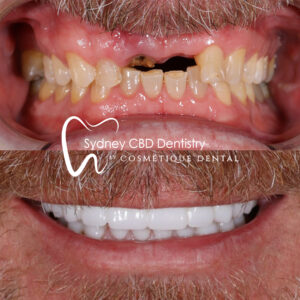
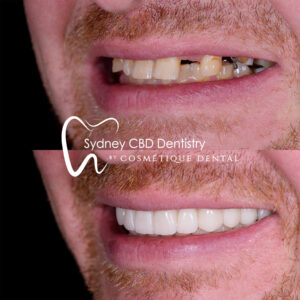
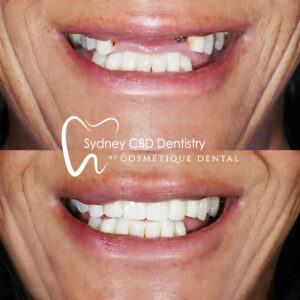
What are Full Mouth Dental Implants or All-on-4?
All-on-X uses dental implants to support a replacement arch of teeth. The number and position of implants depend on individual assessment. Your dentist will discuss suitability, expected benefits, risks, alternatives and maintenance.

Benefits of All-Teeth-On-Implants
Denture Alternative
Implant-supported bridges may improve chewing function and replace missing teeth in suitable patients. Treatment involves surgery and healing. Implant numbers, grafting needs and the timing of temporary teeth vary. Daily cleaning and regular review are required.
Restoration Design and Maintenance
The restoration is planned around your bite, available bone and oral health needs. Appearance, function and lifespan vary. Implants and restorations may require further treatment, repair or replacement.
Dental Implant Treatment Options
Missing teeth can affect oral function. A dental assessment can help you compare replacement options, including implant-supported restorations and removable dentures.
Other Dental Implant Options
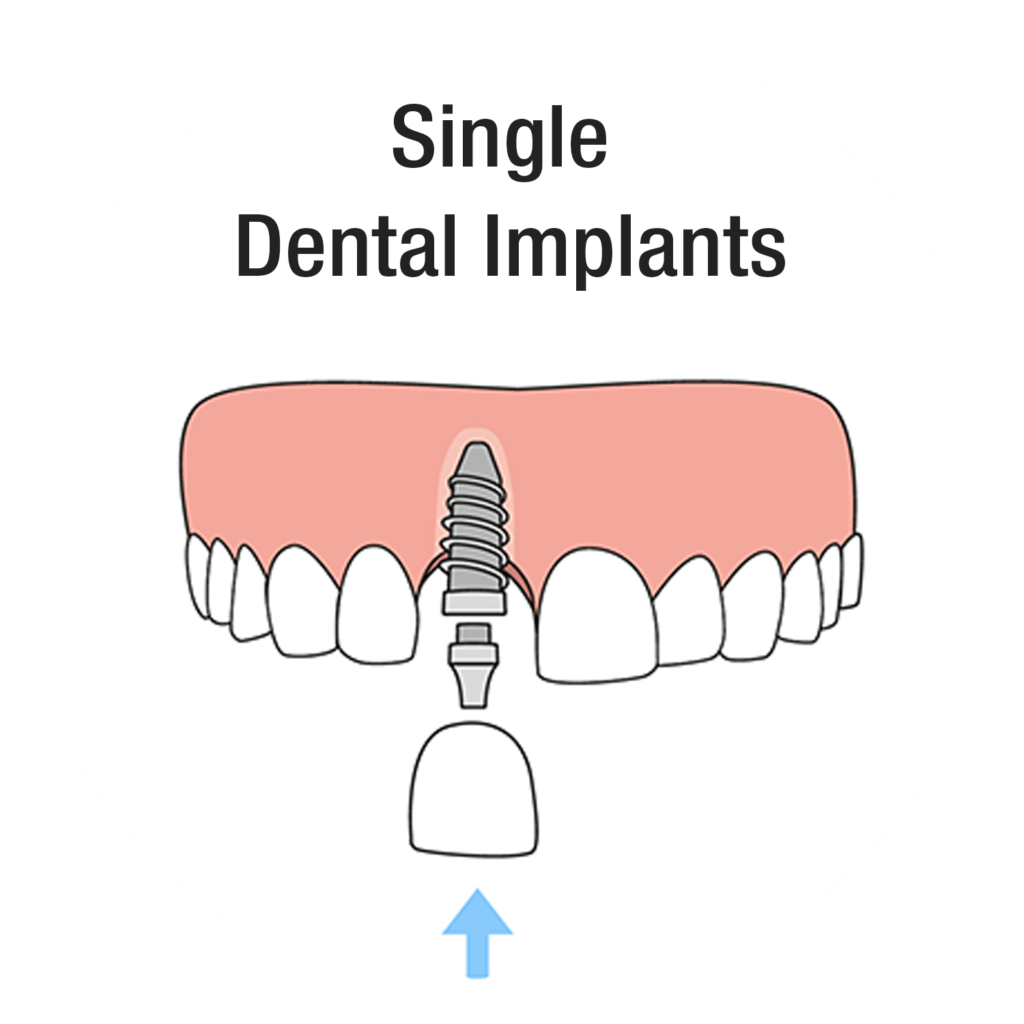
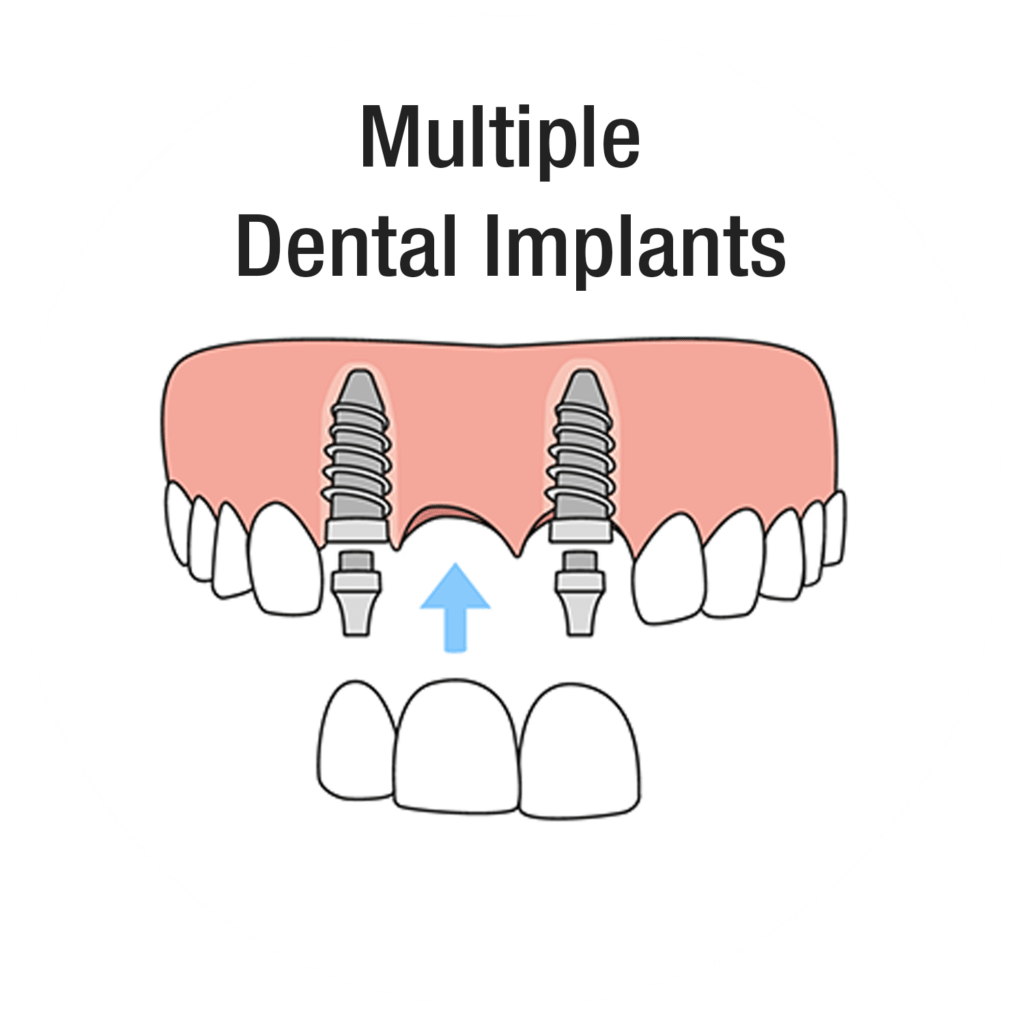
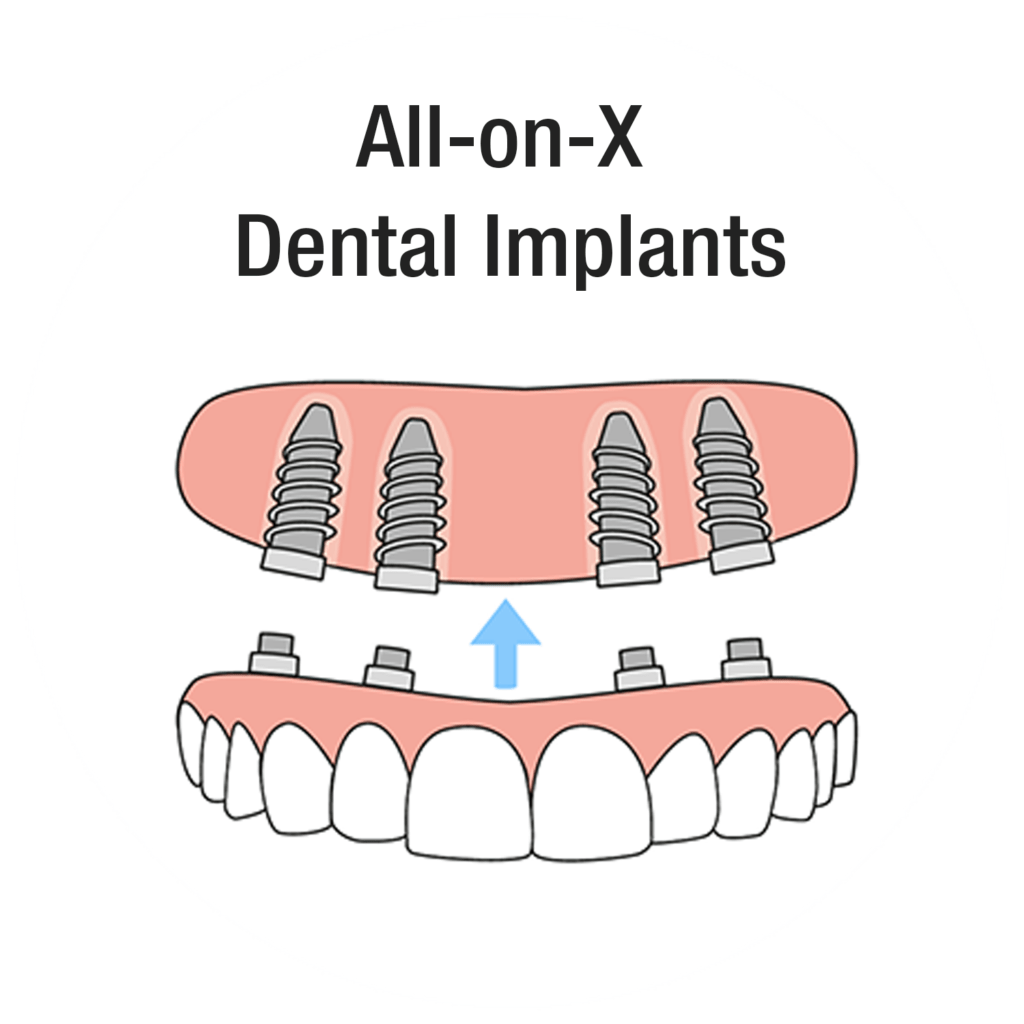
Full-Arch Implant Assessment at Sydney CBD Dentistry
Full-arch implant treatment is one option for replacing an arch of missing teeth. Your dentist will assess any remaining teeth and compare suitable alternatives before discussing whether implants are appropriate.
Implant Assessment at Sydney CBD Dentistry
Our dentists assess each case and discuss the proposed implant treatment, expected benefits, risks, limitations and follow-up care. Treatment plans and outcomes vary between patients.
Arrange an Implant Consultation
Key Benefits of All-on-X and All-on-4 Dental Implants
Implant-Supported Teeth
A fixed implant-supported bridge can replace a missing arch of teeth and may improve chewing function in suitable patients. Appearance, comfort and function vary. Daily cleaning and regular dental review are required.
Treatment Timing
Some suitable patients may receive a temporary bridge shortly after implant placement. This does not mean healing or treatment is complete. Timing and dietary restrictions depend on your individual treatment plan.
Restoration Appearance
The appearance and shape of the restoration are planned for each patient. Changes to facial support or appearance vary and cannot be guaranteed.
Implant Number and Planning
A planned number of implants supports the replacement arch. The number required, treatment complexity, costs and expected outcomes depend on individual assessment.
Outcomes and Ongoing Care
Implant outcomes depend on oral and general health, healing and ongoing care. Implants can fail and restorations may require repair or replacement. Your dentist will discuss these considerations.
Bone Health and Assessment
Your dentist will assess the available jawbone and discuss whether additional treatment is needed. Bone changes can still occur after implant placement.
Comfort and Recovery
A fixed implant-supported bridge does not normally require denture adhesive. Comfort and stability vary. Your dentist will explain the benefits and limitations compared with removable alternatives.
Chewing and Function
Chewing function may improve in suitable patients. Dietary restrictions apply during healing, and your dentist will discuss ongoing food precautions and care.
Individual Goals and Expectations
Treatment decisions should be based on individual oral health needs, expected benefits, risks and alternatives. Psychological or social benefits cannot be guaranteed.
What’s Involved in the All-on-X Procedure?
Step 1: Personalised Consultation & Smile Design
An initial assessment considers your dental needs, medical history, teeth, gums and available bone. Your dentist may recommend imaging and other records where clinically indicated.
The discussion should cover whether teeth can be retained, alternatives such as removable dentures, surgical risks, healing, maintenance and total costs. You may seek a second opinion before deciding.
Step 2: Implant Placement & Provisional Teeth
Before the procedure, the team will explain the proposed sedation or anaesthesia, whether it is appropriate for you and its effects and risks.
The planned implants are placed surgically in the jawbone. A temporary bridge may be fitted soon after placement when clinically appropriate. This depends on implant stability and your treatment plan, and does not mean healing is complete.
Your dentist will explain dietary restrictions, cleaning and follow-up during healing. The timing of final teeth varies.
Step 3: Final Custom-Made Teeth
When healing and implant integration are sufficient, your dentist will plan the final bridge. Materials and design are selected for your individual needs and bite.
Appearance, comfort, function and lifespan vary. Regular review is required, and implants or restorations may need further treatment, repair or replacement.
What Are All-on-4 and Full Mouth Dental Implants?
All-on-4 Dental Implants
All-on-4 uses four implants to support a replacement arch of teeth. It involves surgery and requires assessment of your oral health, available bone and general health.
Your dentist will discuss whether this approach, bone grafting, a different implant plan or a removable option is appropriate. A fixed restoration requires daily cleaning and ongoing maintenance.
Full Mouth Dental Implants
Full-mouth implant treatment can replace teeth in both the upper and lower arches. The number and position of implants depend on your oral health, bone and treatment plan.
The aim is to improve oral function and replace missing teeth. Outcomes vary and cannot be guaranteed. Your dentist will explain the risks, limitations, alternatives, recovery and maintenance requirements.
Full-Arch Implant Risks, Recovery and Costs
Risks include pain, swelling, bleeding, infection, nerve or sinus injury, implant failure and problems with the temporary or final bridge. Removing teeth is irreversible. Grafting or additional treatment may be required.
Healing may take months. Diet, cleaning and review requirements depend on your treatment plan. A temporary bridge does not mean healing is complete. Contact your clinician about worsening symptoms or a loose restoration.
Ask for a written estimate covering assessment, investigations, surgery, temporary and final teeth, and follow-up. Discuss ongoing maintenance, repairs and replacement costs.
Any surgical or invasive procedure carries risks. Before proceeding, you should seek a second opinion from an appropriately qualified health practitioner.